
Dr. Marc Schmitt
Researcher
University of Oxford
United Kingdom
Founder and Director
DEIM Research Institute gGmbH
Germany
I study how machine intelligence transforms financial markets and institutions. My research program, Algorithmic Markets, examines how algorithmic systems reshape information production, capital allocation, and governance. This work builds on a decade in finance and technology, most recently as Senior IT Partner for Equity Finance at Siemens Financial Services.
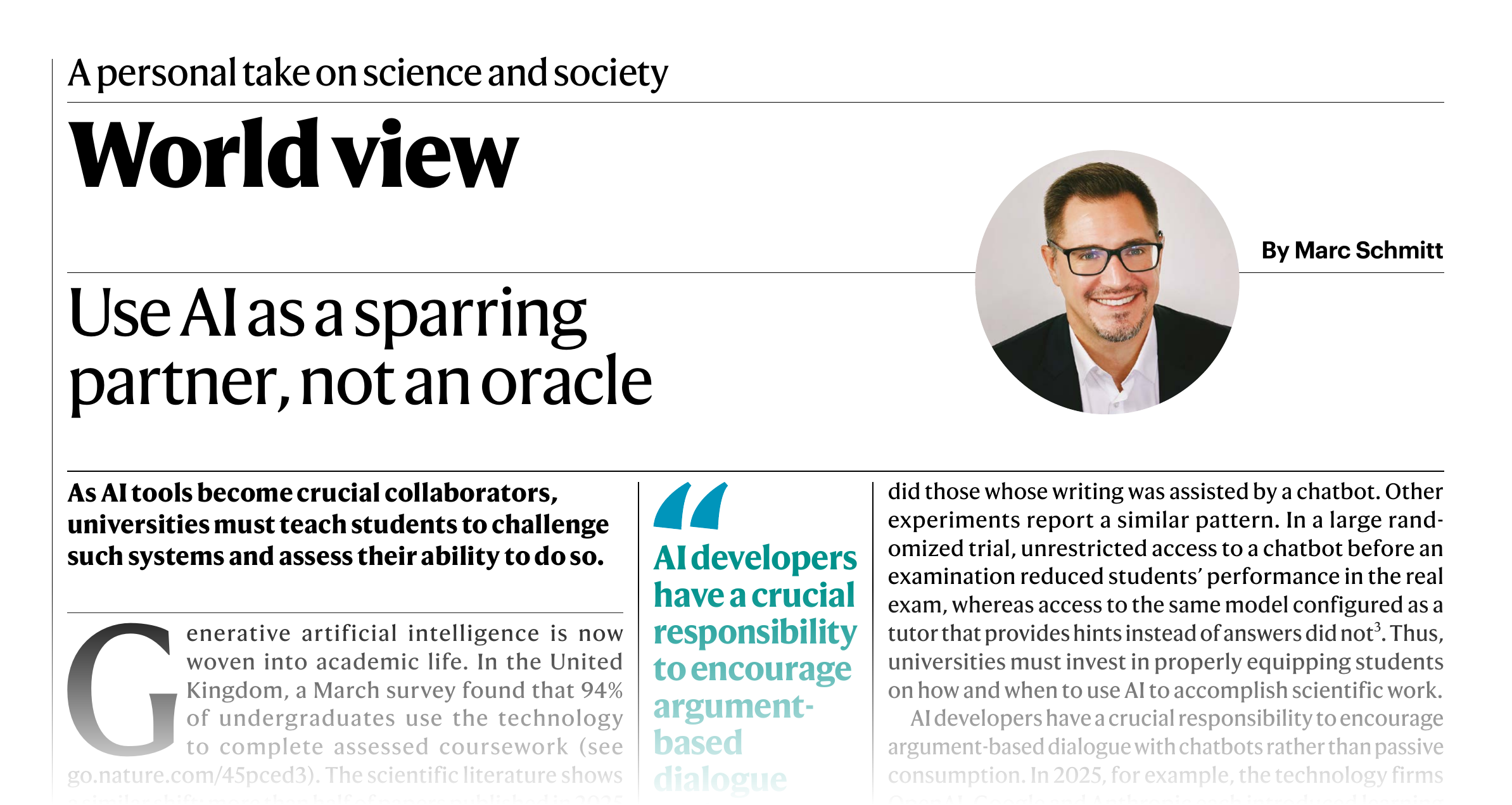
Use AI as a sparring partner, not an oracle
The risk of AI in science is not the technology but passive use. The piece argues for AI as a sparring partner that sharpens reasoning rather than replaces it.
Nature 657, 575 (2026) | Read on nature.com
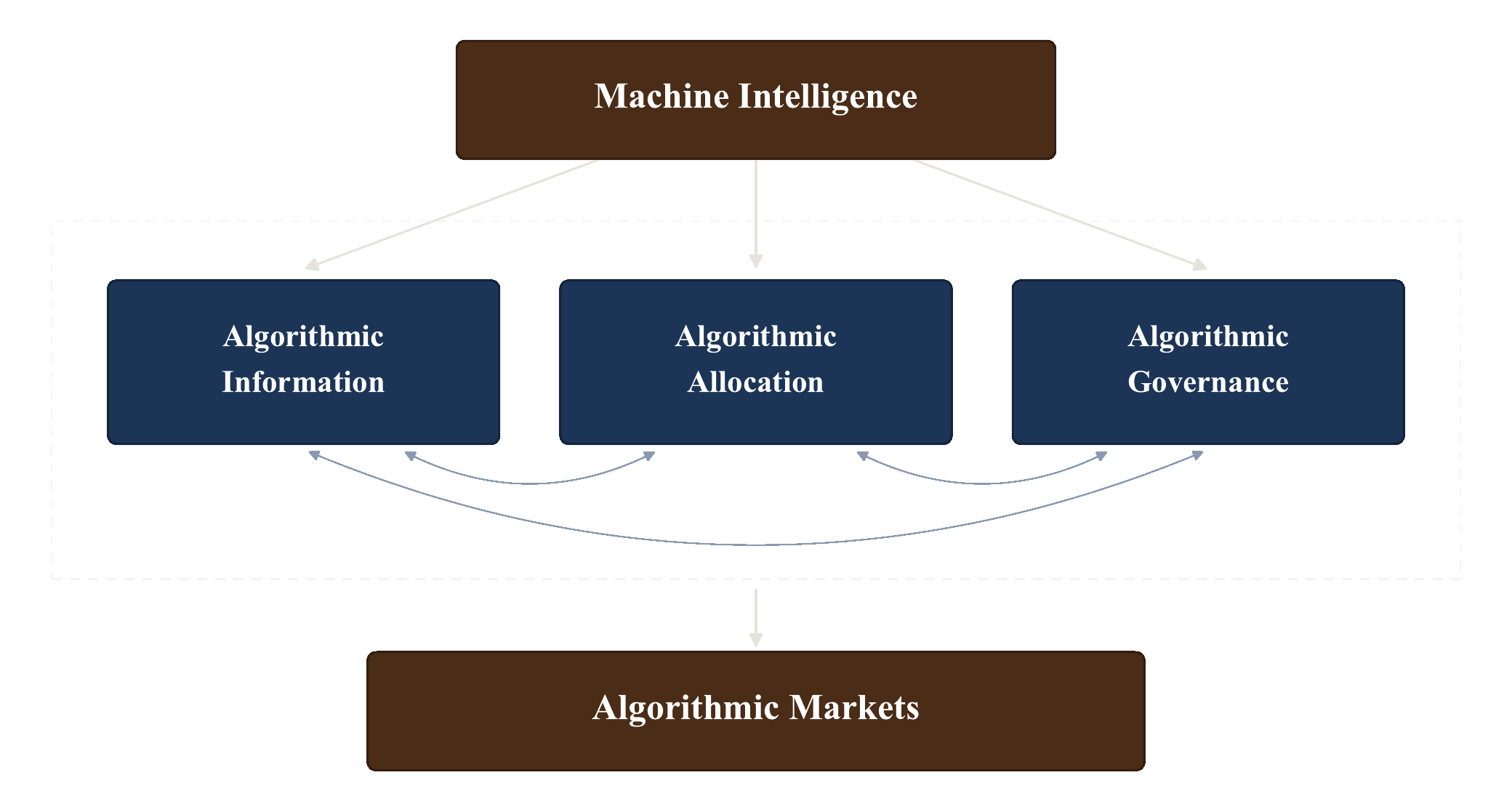
Algorithmic Markets
Financial markets in which the core economic functions of information production, capital allocation, and governance are substantially executed by algorithmic systems that operate at scale and adapt faster than human discretionary judgment.
The framework organizes this transformation around three functions: algorithmic information, algorithmic allocation, and algorithmic governance.
Research Focus
AI-driven decision-making in markets and organizations
- I study AI-driven and AI-augmented decision making in the context of business, finance, and security.
- My research program Algorithmic Markets examines how algorithmic systems reshape information production, capital allocation, and governance in financial markets.
- I also study how intelligent systems, such as AI agents and machine learning models, are integrated into organizational structures, shaping strategy, governance, and operational workflows.
- Further, I examine the broader institutional and systemic implications of these technologies in the context of digital ecosystems.
- My papers apply these concepts across a broad range of topics, including: (1) Finance: asset pricing, portfolio and risk management, corporate finance, and FinTech; (2) Business: strategic and operational decision-making, digital transformation, and organizational AI capabilities (e.g., Chief AI Officer); (3) Security: cybersecurity decision-making, generative AI threats, and algorithmic governance.